
Nigeria’s National Single Window Is Changing How Fast Your Cargo Clears — Here’s What Shippers Need to Know
If you’ve shipped into Lagos before, you already know the biggest bottleneck isn’t the ocean crossing — it’s what happens after the ship docks. Nigeria’s government has spent 2026 rolling out a fix, and it’s now far enough along that it’s actually changing clearance timelines for real shipments.
What the National Single Window Actually Is
The National Single Window (NSW) is a digital trade platform that puts every government agency involved in clearing cargo — Customs, NAFDAC, SON, port authorities, and others — onto one shared portal. Instead of chasing separate approvals from each agency, importers and their agents submit everything once.
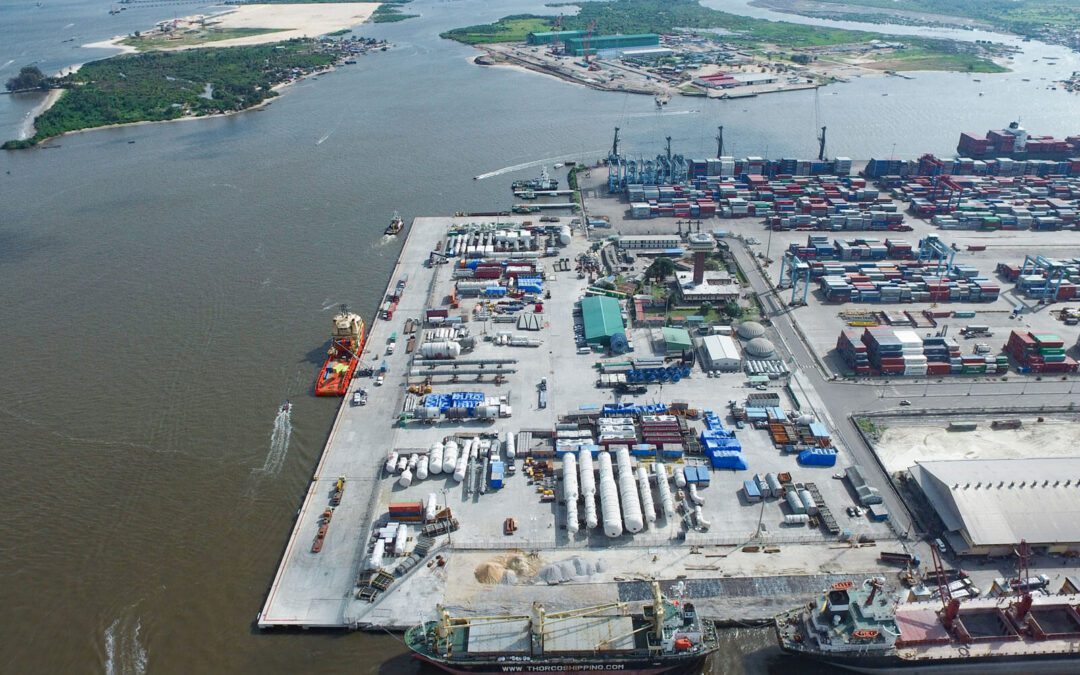
Phase 1 went live at the end of Q1 2026, with a clear target attached: cut average cargo dwell time at Nigeria’s ports from around 21 days down to under 7. Apapa Port and Tin Can Island — which together handle roughly 70% of Nigeria’s maritime trade — were the starting point, alongside an upgrade programme for both terminals.
What’s Changed Since Go-Live
The rollout hasn’t been a single flip of a switch — it’s been staged, with real friction along the way:
- Support infrastructure followed fast. A dedicated Support Centre opened at 34 Wharf Road, Apapa, right in the middle of the port corridor, plus a helpdesk for remote queries — a sign the government anticipated (correctly) that agents and importers would need hand-holding through the transition.
- Early complaints have been addressed. Stakeholder forums earlier in 2026 surfaced real issues: delayed approvals, inconsistent documentation requirements, and system downtime. According to recent reporting, support requests have dropped from around 30% of transactions during early implementation to roughly 10% now — a meaningful sign the platform is stabilising.
- E-manifest submission is now live. Nigeria Customs and shipping lines began electronic submission of maritime manifests directly through the NSW system, another step toward removing manual, paper-based handoffs.
- More phases are coming. Phase 2 (targeted for Q2–Q3 2026) adds export licence applications, NXP processing, and Form M initiation directly on the platform. Phase 3, expected in Q1 2027, brings duty assessment, payment, and advanced risk analytics into the same system.
Why This Matters for Australia–Nigeria Shippers
For businesses moving goods along the Australia–Nigeria shipping corridor, the practical impact comes down to two things: speed and documentation accuracy.
Faster clearance, if your paperwork is right. The entire point of the NSW is to compress the gap between “ship arrives” and “goods released.” That’s good news — but it also raises the cost of getting documentation wrong, since the system is built around clean, complete submissions the first time.
Fewer redundant approvals. Previously, an importer might submit similar information separately to Customs, NAFDAC, and port authorities. Consolidating that onto one platform reduces the chances of one agency’s delay holding up the whole shipment.
A system still finding its footing. Support request rates falling from 30% to 10% is real progress, but it also means roughly 1 in 10 transactions is still hitting friction. Shipments with anything less than clean documentation remain the ones most likely to get caught in that friction.
What This Means in Practice
None of this changes the fundamentals — Form M, PAAR, commercial invoices, and the rest of the core document set are still required. What’s changing is the system processing them, not the documents themselves. If anything, the NSW rewards shippers who already have their documentation discipline sorted, and penalises those who don’t, since delays now surface faster and more visibly.
For Australian exporters shipping into Apapa or Tin Can Island, this is a good moment to make sure your customs documentation process is airtight before your next shipment departs — not after it’s sitting in a queue.
Widoph Logistics’ Nigeria customs clearance service handles declaration lodgment, tariff classification, and biosecurity coordination on your behalf, so NSW submissions go in clean the first time.
Get in touch to make sure your next Australia–Nigeria shipment is ready for the new system.