
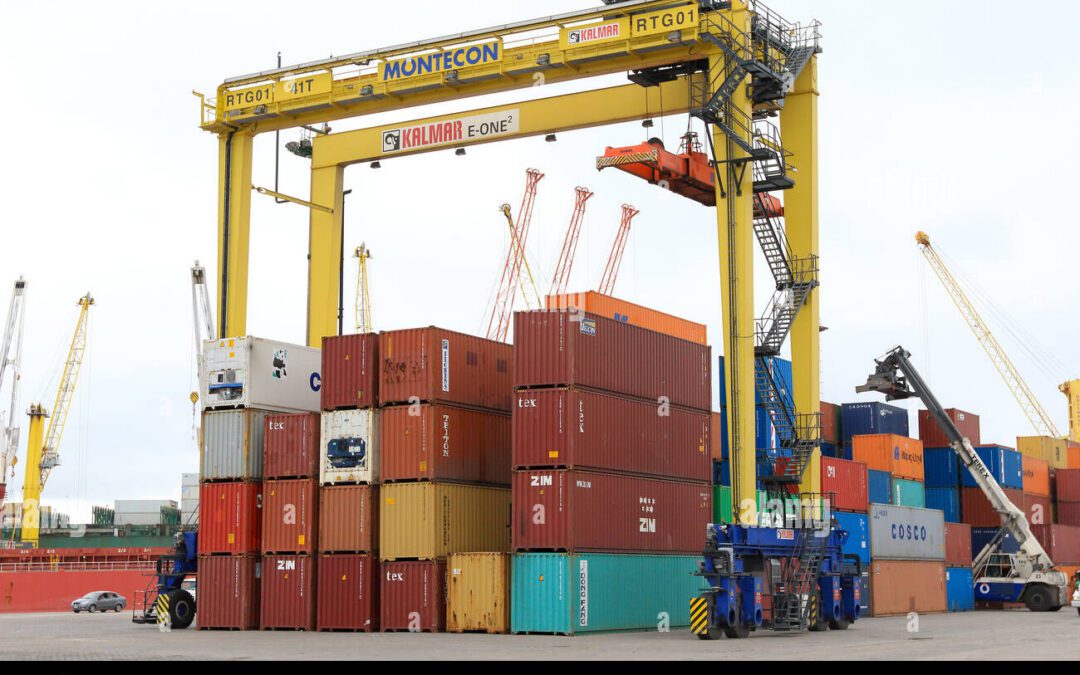
NPERA Is Here: What Nigeria’s New Port Regulator Means for Your Shipments
If you import into Nigeria, ship freight through Lagos, or manage clearing agents on your behalf, there’s a regulatory shift this month that will touch your costs and timelines directly.
On August 12, 2026, President Bola Tinubu signed the Nigeria Ports Economic Regulatory Agency (NPERA) Act into law, formally replacing the Nigerian Shippers’ Council with a dedicated statutory regulator for port economics. NPERA began operations days later, and the maritime industry is already calling it the most significant port governance reform in decades.
For businesses moving cargo in and out of Nigeria, this isn’t background policy noise — it’s a development that directly affects what you pay at the port, how long clearance takes, and how disputes with terminal operators get resolved.
What Is NPERA, and Why Was It Created?
For nearly five decades, port economic oversight in Nigeria sat with the Nigerian Shippers’ Council, a body many importers, exporters, and freight forwarders felt lacked the statutory teeth to challenge terminal operators and shipping lines on arbitrary charges. Industry groups had spent years pushing for a dedicated economic regulator with real enforcement power.
That gap is now closed. NPERA takes over full statutory responsibility for:
- Tariffs and charges — reviewing and approving what terminal operators and shipping lines can bill port users
- Licensing of port service providers
- Service standards across the port ecosystem
- Fair competition enforcement among operators
- Commercial dispute resolution between shippers and service providers
- Trade facilitation and protection of port users’ interests
The outgoing Shippers’ Council had already shown what a stronger regulator can recover: officials disclosed that unjustified port charges worth over ₦86 billion were clawed back for port users between late 2023 and mid-2026, alongside several million dollars in additional savings. NPERA now inherits — and is expected to expand — that mandate with a firmer legal footing.
Why This Matters for Importers, Exporters, and Freight Forwarders
The day-to-day pain point NPERA is aimed at is a familiar one: small individual charges for documentation, cargo handling, storage, truck access, and delivery that seem minor on their own but stack up quickly across the clearance process, quietly inflating the landed cost of imported goods.
With a dedicated regulator now empowered to scrutinize and challenge these charges, industry expectations for the coming months include:
- Greater transparency in port charges — operators will need stronger justification before raising tariffs.
- More predictable port-call and clearance costs — useful for budgeting shipments months ahead.
- A formal channel for disputing charges — instead of absorbing detention, demurrage, or storage fees you believe are unwarranted.
- Faster cargo release in contested cases — the regulator has already shown willingness to act quickly on improper detention charges in its opening days.
None of this happens overnight. NPERA itself has acknowledged that the transition from the Shippers’ Council will take time, and that its success depends on coordinating with the Nigeria Customs Service, the Nigerian Ports Authority, NIMASA, and terminal operators without duplicating their roles. But for anyone shipping into Nigeria, this is a regulator worth watching closely over the next two quarters as its rules and enforcement patterns take shape.
A Second Piece of Good News: US Lifts 12-Year Shipping Security Restrictions
NPERA isn’t the only maritime development this month. On August 18, 2026, Nigeria’s Minister of Marine and Blue Economy announced that the US Coast Guard had lifted the Conditions of Entry restrictions it had placed on Nigerian-flagged vessels since 2014 — a designation tied to port security compliance under international maritime security codes. The change followed a series of security assessments carried out between 2024 and 2026 that showed measurable improvement in Nigeria’s port facility security standards.
Fewer restrictions on Nigerian vessels calling at US ports generally translates into reduced compliance overhead and, over time, lower shipping costs on routes touching Nigeria — a welcome tailwind alongside NPERA’s tariff reforms. It’s worth noting this doesn’t change Nigeria’s ongoing maritime security advisories around piracy risk in the Gulf of Guinea, which shippers should continue to plan around.
What Should You Do Now?
Whether you’re an importer scheduling Q4 shipments, an exporter working with Nigerian ports, or a business relying on a clearing agent, this is a good moment to:
- Review recent port charges on past shipments for anything that looks arbitrary or undocumented — NPERA’s complaint channels are now the place to raise them.
- Ask your freight forwarder or clearing agent how they plan to track NPERA’s tariff rulings as they’re published.
- Build in some buffer for the next few months while the transition from the Shippers’ Council settles, rather than assuming clearance timelines will improve immediately.
- Stay close to customs digitization changes running in parallel — NICIS II and the Single Window Trade Portal are pushing Nigeria toward fully paperless clearance by the end of 2026, which compounds the impact of NPERA’s reforms.
Navigating Nigeria’s clearance process is rarely simple even without a regulatory shake-up in progress. If you’d like a hand reviewing your current customs clearance costs and process against these changes, our team can walk through your shipment history and flag where NPERA’s new dispute channels might apply to you.
FAQ
Is NPERA replacing Nigeria Customs Service?
Will port charges drop immediately under NPERA?
Does the US lifting shipping restrictions affect all Nigerian shipments?
Sources: The Guardian Nigeria, TheCable, Leadership News, The Sun Nigeria, Tribune Online, BusinessDay NG, MMS Plus NG, and the Rio Times (August 2026 maritime industry coverage).